
Explore key technology breakthroughs transforming the Electronic Grade Specialty Chemicals for Semiconductors Market to USD 61.5 Billion by 2035 at 6.8% CAGR.
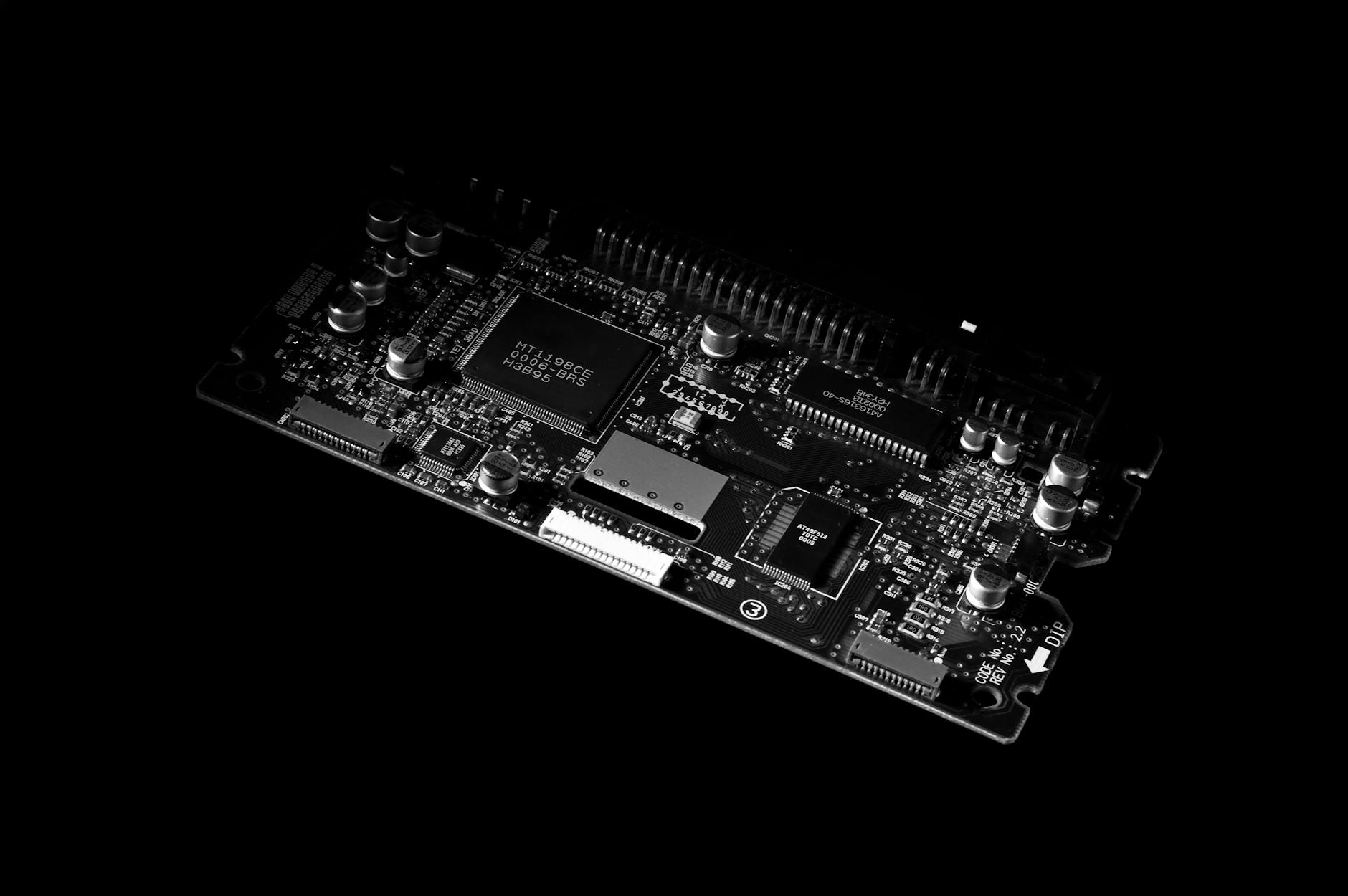
How Cutting-Edge Technology Is Transforming the Electronic Grade Specialty Chemicals for Semiconductors Market
Accelerating Technological Disruption in Electronic Grade Specialty Chemicals for Semiconductors
We observed that technological evolution is rapidly recalibrating the operational dynamics of the electronic grade specialty chemicals sector for semiconductors. Demands for enhanced autonomy, interoperability, and hardened reliability are accelerating the obsolescence of legacy architectures and catalyzing next-generation platform development.
The global market was valued at USD 31.8 Billion in 2025 and is projected to surge to USD 61.5 Billion by 2035, exhibiting a CAGR of 6.8% from 2026 to 2035. This sustained expansion is underpinned by rapid adoption of automated sensor architectures, distributed edge processing, and resilient hardware designs.
For an in-depth analysis of the market, try a free sample.
Key technology adoption metrics across primary application vectors:
Electronic Grade Specialty Chemicals for Semiconductors Technology Adoption Comparison, 2026–2035 (USD Billion)
| Technology / Application Segment | 2025 (USD Billion) | 2035 (USD Billion) | CAGR (2026–2035) |
|---|---|---|---|
| Systems & Hardware | 15.26 | 31.00 | 7.4% |
| Software & Digital Platforms | 10.18 | 18.70 | 6.2% |
| Integration & Services | 6.36 | 12.92 | 7.4% |
| Total | 31.80 | 61.50 | 6.8% |
Source: Chemical Industry Insights Analysis, 2026
Deployment patterns reveal a decisive transition from discrete hardware procurement toward software-defined, upgradeable architectures capable of continuous capability insertion over multi-decade lifecycles.
Core Platform Architectures & Advanced Systems
Modern platform architectures for this sector combine precision sensing, distributed compute, and real-time signal processing into unified subsystems. Sensor fusion routines reconcile data from multiple modalities, allowing controllers to resolve process variations within milliseconds rather than relying on periodic manual calibration. Edge processors execute these routines locally, which reduces dependence on centralized infrastructure and sustains performance during connectivity interruptions.
Brewer Science advanced its core platform architecture for electronic grade specialty chemicals for semiconductors systems, with the milestone documented in its January 20, 2026 newsroom update. The company's solutions are currently operating across major enterprise deployments, reflecting a commercial transition from pilot validation to sustained field use. Its platform strategy emphasizes integration with existing process tooling, shortening qualification timelines for customers (Brewer Science Corporate Communications & Newsroom).
Commercial Solutions & Scalable Enterprise Infrastructure
Advanced formulations in this segment depend on high-purity composite materials engineered for thermal resistance and low contamination profiles. Structural signatures measured during qualification confirm that these materials maintain dimensional and chemical stability under demanding operating conditions. This material performance underpins the reliability that enterprise buyers require when scaling production volumes.
Heraeus Epurio's commercial portfolio supports scalable enterprise infrastructure, with its enterprise scalability milestone documented on November 15, 2025. The deployment is operating and aligned with enterprise scalability architectures across major customer environments, indicating that the platform has moved beyond evaluation into routine commercial service. The company's approach focuses on repeatable deployment models that allow customers to expand capacity without redesigning core systems (Heraeus Epurio Corporate Communications & Newsroom).
Secure Cloud Telemetry & Connected Data Orchestration
Connected data orchestration links process equipment, quality systems, and enterprise planning tools through secure, standards-aligned data pipelines. Interoperable cloud connectivity allows telemetry to flow between plant floor controllers and analytics environments without proprietary bottlenecks. Security frameworks such as ISO 27001 guide the access controls and information governance that these pipelines require.
GPPC reported an operating secure cloud telemetry deployment on March 4, 2026, reflecting growing enterprise adoption of connected data architectures in this sector. The milestone places the company's telemetry capabilities into active commercial use across its customer base rather than limiting them to pilot programs. Its strategy centers on secure, interoperable data flows that give operators real-time visibility into production conditions (GPPC Corporate Communications & Newsroom).
Predictive Analytics, Digital Modeling & Operational Optimization
Predictive maintenance algorithms analyze equipment signatures to forecast component wear before failures interrupt production. Digital twins replicate process conditions in virtual environments, allowing engineers to test parameter changes without risking yield. Supply chain telemetry extends these models outward, aligning material availability with production schedules.
AWI (Air Water Inc.) documented an operating predictive analytics deployment on September 28, 2025, extending its digital modeling and operational optimization capabilities into active commercial use. The deployment supports tighter process control and more informed maintenance scheduling for enterprise customers. These gains translate into fewer unplanned interruptions and more consistent output across production lines (AWI (Air Water Inc.) Corporate Communications & Newsroom).
Strategic Outlook: Roadmap to 2035
Over the next decade, capital allocation in this market will favor platforms that combine modular hardware with upgradeable software layers. Companies that invest in sensor fusion, edge computing, and secure data orchestration will be positioned to capture the segment growth projected across systems, software, and integration services. Priority should go to architectures that allow capability insertion without full system replacement, since this extends asset lifecycles across multi-decade operating horizons.
Technology modernization will also require closer collaboration between chemical suppliers, equipment manufacturers, and standards bodies. Adherence to frameworks such as ISO 9001 and ISO 27001 will remain central to customer trust as connectivity deepens. Market leaders that align product roadmaps with these governance expectations, while maintaining disciplined investment in interoperability, will be best placed to sustain growth toward the USD 61.5 Billion market projected for 2035.